One of the first questions people ask before starting a new language is how long does it take to learn Spanish? The answer depends on your starting level, your goals, how often you study, and how much real exposure you have to the language.
Someone who wants to order food, ask for directions, and handle basic travel situations will need less time than someone who wants to work professionally in Spanish or participate confidently in complex conversations.
Learning Spanish is usually a gradual process. Vocabulary, listening, speaking, reading, grammar, and confidence develop together.
How Long Does It Take to Learn Basic Spanish?
A beginner studying consistently can start understanding and using basic Spanish within a few months.
What Can You Learn in the First Few Months?
During the early stages, students usually focus on:
- greetings
- introductions
- numbers
- dates and time
- ordering food
- asking questions
- directions
- shopping
- common travel situations
With regular classes and independent practice, many learners can begin handling simple everyday interactions within approximately two to six months.
Why Study Frequency Matters
Studying once a week produces a very different result from having several lessons and regular speaking practice.
The more frequently you interact with Spanish, the easier it becomes to remember vocabulary and use common structures naturally.
How Long Does It Take to Become Conversational in Spanish?
Being conversational means being able to participate in everyday discussions without translating every sentence mentally.
For many students, reaching a comfortable conversational level can take approximately six to twelve months of consistent study and practice.
What Does Conversational Spanish Mean?
Conversational Spanish usually means you can:
- introduce yourself confidently
- describe experiences
- talk about work or family
- ask follow-up questions
- understand common responses
- handle everyday situations
- continue a conversation even when you do not know every word
Making mistakes is normal. The priority is communication.
Can You Become Conversational Faster?
Yes, especially if you combine classes with daily listening, speaking practice, and real interaction.
A learner who studies several times each week and regularly speaks Spanish may progress faster than someone who only completes occasional exercises.
How Long Does It Take to Become Fluent in Spanish?
Fluency is harder to measure because different learners define it differently.
Basic Fluency vs Advanced Fluency
Some people consider themselves fluent when they can travel independently and maintain conversations.
Others want to understand films, work professionally, read complex texts, or participate in academic discussions.
Reaching a strong intermediate or advanced level may require one to two years or more of regular learning.
Why Total Exposure Matters
The number of months alone is not the most important factor.
A learner studying and practising Spanish for ten hours per week will usually progress differently from someone studying for one hour.
What Factors Affect How Quickly You Learn Spanish?
Your Starting Level
Complete beginners need time to build vocabulary and understand basic structures.
Someone who previously studied Spanish may recover forgotten knowledge more quickly.
How Often You Study
Consistency matters more than occasional intense study.
Short, regular study sessions are often more useful than studying for several hours once and then stopping for weeks.
How Much You Speak
Speaking transforms passive knowledge into active communication.
You may understand hundreds of words while reading but still struggle to use them during conversation.
Your Exposure to Spanish
Listening to Spanish outside class can reinforce your learning.
Useful activities include podcasts, videos, reading, music, conversation, and cultural content.
Can You Learn Spanish in Three Months?
You can make meaningful progress in three months, but becoming completely fluent is usually unrealistic for a beginner.
Realistic Goals for Three Months
After three months of focused study, a learner may be able to:
- introduce themselves
- understand basic questions
- order at restaurants
- ask for directions
- talk about their routine
- understand common vocabulary
- hold short conversations
These are valuable achievements.
Why Practical Goals Work Better
Instead of saying “I want to be fluent,” it is more useful to define measurable goals.
For example, aim to hold a five-minute conversation or navigate a restaurant entirely in Spanish.
What Is the Fastest Way to Learn Spanish?
There is no magic shortcut, but there are effective strategies.
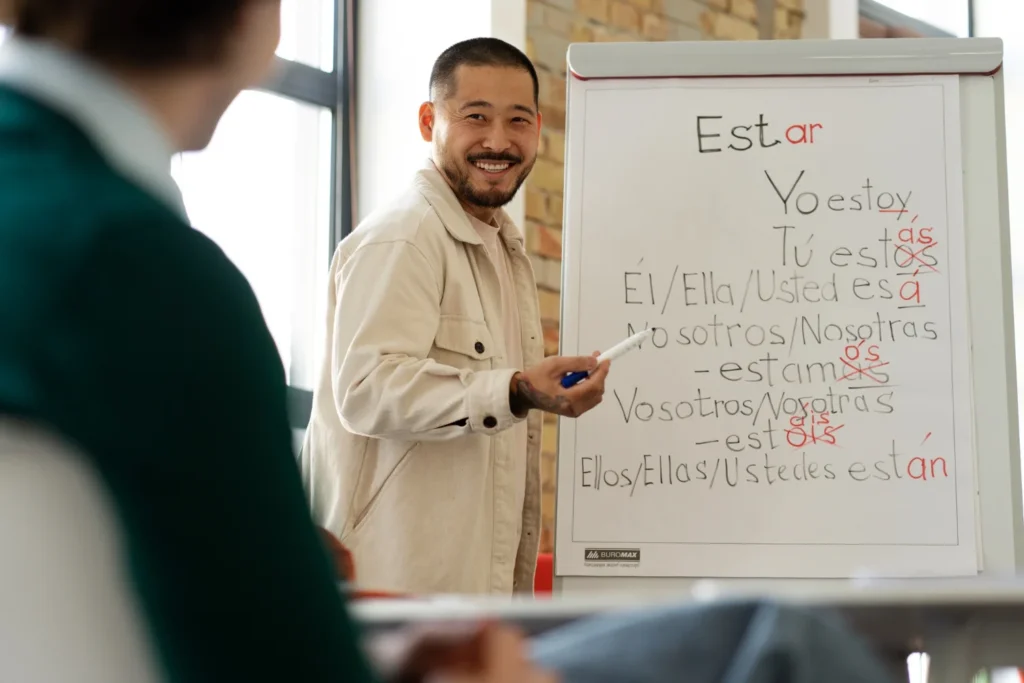
Combine Classes With Independent Practice
Classes provide structure, correction, and progression.
Independent practice reinforces what you learn between lessons.
Speak From the Beginning
Do not wait until your Spanish feels perfect.
Speaking is part of the learning process.
Learn Useful Vocabulary First
Focus on vocabulary connected to travel, hobbies, family, work, food, transportation, and everyday life.
Practise Listening Every Day
Even ten or fifteen minutes per day can help your ear become more familiar with Spanish pronunciation and rhythm.
Does Studying Spanish Abroad Help You Learn Faster?
Immersion can significantly increase your exposure to the language.
Why Immersion Works
When studying in a Spanish-speaking destination, you can use Spanish while:
- ordering food
- shopping
- visiting museums
- asking for directions
- attending cultural activities
- speaking with local people
Spanish becomes part of daily life.
Spanish Immersion in Spain
Cities such as Seville, Cádiz, and Málaga allow learners to combine language classes with cultural experiences.
This can create a stronger connection between classroom learning and real communication.
Can Adults Learn Spanish Successfully?
Yes. Adults often have clear motivations and established learning habits.
Advantages Adult Learners Have
Adults usually know why they want to learn.
Their goals may include:
- travel
- retirement
- family communication
- cultural experiences
- professional development
- personal enrichment
These clear motivations can help maintain consistency.
How Can I Learn Spanish More Effectively?
If you are wondering how can I learn Spanish, start with a simple and repeatable system.
Build a Weekly Routine
Combine:
- structured classes
- vocabulary review
- listening
- reading
- conversation
- real-life practice
Measure Practical Progress
Ask yourself:
Can I understand more than three months ago?
Can I speak for longer without switching languages?
Can I handle situations that previously felt difficult?
These are stronger indicators than simply counting lessons.
Start Learning Spanish With a Clear Goal
So, how long does it take to learn Spanish?
Basic communication may begin within a few months, conversational ability may require six to twelve months or longer, and advanced proficiency usually requires sustained learning over a longer period.
ABCD Languages can help students choose a Spanish learning path according to their level, schedule, travel plans, and personal objectives.
The key is not learning Spanish as quickly as possible. It is building a routine that you can maintain long enough to become genuinely confident using the language.